

Commentary
Michael Young
{
  "authors": [
    "Michael Young"
  ],
  "type": "commentary",
  "blog": "Diwan",
  "centerAffiliationAll": "",
  "centers": [
    "Carnegie Endowment for International Peace",
    "Malcolm H. Kerr Carnegie Middle East Center"
  ],
  "englishNewsletterAll": "",
  "nonEnglishNewsletterAll": "",
  "primaryCenter": "Malcolm H. Kerr Carnegie Middle East Center",
  "programAffiliation": "",
  "regions": [
    "Iran",
    "United States",
    "Gulf",
    "Levant",
    "Israel"
  ]
}
Source: Getty
Spot analysis from Carnegie scholars on events relating to the Middle East and North Africa.
What Happened?
Shortly before President Donald Trump’s deadline for Iran to reopen the Strait of Hormuz—without which the United States would have destroyed Iranian civilian infrastructure, causing “a whole civilization [to] die tonight,” in the president’s words—the two sides agreed to a two-week ceasefire. The agreement was mediated by Pakistan’s Prime Minister Shehbaz Sharif and military chief Asim Munir, with the participation of Türkiye and Egypt.
Sharif announced the outcome in a tweet, and stated that he had invited “[the U.S. and Iranian] delegations to Islamabad on Friday, 10th April 2026, to further negotiate for a conclusive agreement to settle all disputes.” The prime minister also announced that the ceasefire would be immediate and would include “Lebanon and elsewhere.” In turn, Israeli Prime Minister Benjamin Netanyahu tweeted that Israel supported the U.S. “decision to suspend strikes against Iran for two weeks subject to Iran immediately opening the straits and stopping all attacks on the U.S., Israel and countries in the region,” but he also added that “[t]he two-week ceasefire does not include Lebanon.”
Why Is It Important?
The ceasefire ended a tense day in which Trump and the Iranians were engaged in a game of brinkmanship nearly to the end. The U.S. president announced on his Truth Social account that he would wipe out Iran, which provoked a very negative reaction among the president’s own conservative base. Reports also indicated that the Iranians had called off negotiations with Washington, with Iran’s first vice president saying in a social media post, “Our response to the enemy’s brutality is to stand firm on our national interests and rely on the inner strength of the great Iranian nation.” Yet it seemed fairly apparent that none of the sides saw any interest in continuing the conflict—both because of the terrible destruction the United States was prepared to visit on Iran, but also because there appeared to be nothing the Americans could do to reopen the Strait of Hormuz.
The fact that the Israelis continued their military operations in Lebanon left two major questions unanswered: Why had Tehran agreed to a ceasefire with the United States and Israel, when it had earlier refused anything less than a full cessation of hostilities? And did it agree to a ceasefire that did not cover Lebanon, when it had insisted that Lebanon be included in any such arrangement? The answer to the first question seemed obvious, namely that the prospect of a major U.S. escalation against Iranian infrastructure did not leave Iran’s leadership with much leverage to impose a permanent ceasefire.
As for the second question, Israel’s refusal to include Lebanon in the ceasefire created a dilemma for Iran. If it continued to respect the ceasefire, despite Israeli violations in Lebanon, this would only underline Iran’s abandonment of its Lebanese allies, implying the latter’s sole purpose was to serve as Iranian cannon fodder. On the other hand, if Iran refused to implement the ceasefire on the grounds that Israel was not respecting it, this would serve Israel very well, since it is unhappy with a ceasefire. Indeed, on April 5, Netanyahu warned Trump against agreeing to a ceasefire at this stage.
The reopening of the Strait of Hormuz will be pitched as a major victory by Trump, even if the Iranians have indicated that its reopening for two weeks will take place “via coordination with Iran’s Armed Forces and with due consideration of technical limitations.” On the morning after the ceasefire, it had already brought temporary calm to the markets, with the price of Brent crude plunging by 15 percent to below $93.82 a barrel. In recent weeks, Trump had struggled to isolate the U.S. economy from the impact of the war with Iran, but he was nearing the end of the rope in his ability to do so, as it became evident that the United States had no silver bullet to reopen the Strait of Hormuz.
What Are the Implications for the Future?
There is much that remains unknown in the ceasefire agreement. One thing that was intriguing was Trump’s remark that the United States had received a ten-point proposal from Iran “and believe it is a workable basis on which to negotiate.” Iran has just released its plan, however U.S. officials are saying the released version does not correspond to the one to which Trump was referring. The proposal includes a U.S. non-aggression agreement with Iran, continued Iranian control over the Strait of Hormuz, a withdrawal of all U.S. military forces from the Middle East, acceptance of Iran’s right to nuclear enrichment, reparations for war damages, and the lifting of all primary and secondary sanctions on Iran, among other things.* It’s hard to see the Trump administration negotiating on such terms. Indeed, the Iranian plan was a response to an equally draconian fifteen-point plan presented by the United States in late March. Therefore, what exactly will the parties be discussing in Islamabad later this week? Is it some hybrid proposal, a new accord, or something else? No one seems to know.
A second question, though one less immediately vital, may have long-term implications. According to Trump, China intervened to persuade Iran to negotiate with the United States, a detail that Iranian officials confirmed. Recall that during the October 1973 Arab-Israeli war, after a ceasefire agreement had been reached, the Soviet Union had threatened to intervene militarily when Israel pursued its attacks against Egypt’s Third Army. The Nixon administration had mobilized U.S. forces in response, because the secretary of state at the time, Henry Kissinger, wanted at all costs to avoid ending the war because of a Soviet ultimatum, which would have strengthened Moscow’s standing at Washington’s expense. Yet Trump’s admission about China did precisely what Kissinger had tried to avoid—making Washington’s global rival look like a responsible actor, saving the world from a mad war provoked by the United States and Israel. This will have repercussions internationally, and not to America’s advantage.
A final thing to look for is how the situation in Lebanon plays out, and how Iran responds to Israel’s refusal to accept a ceasefire in the Lebanese arena. On April 8, Israel engaged in heavy bombings of locations throughout Lebanon, including areas in central Beirut not usually targeted, causing large numbers of deaths and injuries. This appeared to be an effort by the Israelis to torpedo the ceasefire agreement, as they realized that Iran could not easily absorb the reputational damage of signing off on a ceasefire at home while ignoring Israeli atrocities in Lebanon. Therefore, Tehran could be inclined to go back on the ceasefire agreement, or at least make its implementation conditional.
However, beyond the ceasefire, what will the end of fighting mean for Lebanon’s standing in any final deal between the United States and Iran? Will curbing pro-Iran forces in the region be any part of a negotiated agreement between Washington and Tehran? Is this even conceivable, given Iran’s sense of vulnerability today? On the other hand, if a broad accord does not address Iran’s allies, Israel would view this as a major setback, as would the Lebanese government, which is trying desperately to spare Lebanon from involvement in regional proxy wars. This means that the country, which appears to be no one’s priority, may face many new problems in the months and years ahead.
* This entire paragraph was amended because shortly after the article was published, Iran released the details of their ten-point plan, which U.S. officials say is different than the one to which Trump was referring.

Editor, Diwan, Senior Editor, Malcolm H. Kerr Carnegie Middle East Center
Michael Young is the editor of Diwan and a senior editor at the Malcolm H. Kerr Carnegie Middle East Center.
Recent Work
Michael Young
Michael Young
Carnegie does not take institutional positions on public policy issues; the views represented herein are those of the author(s) and do not necessarily reflect the views of Carnegie, its staff, or its trustees.
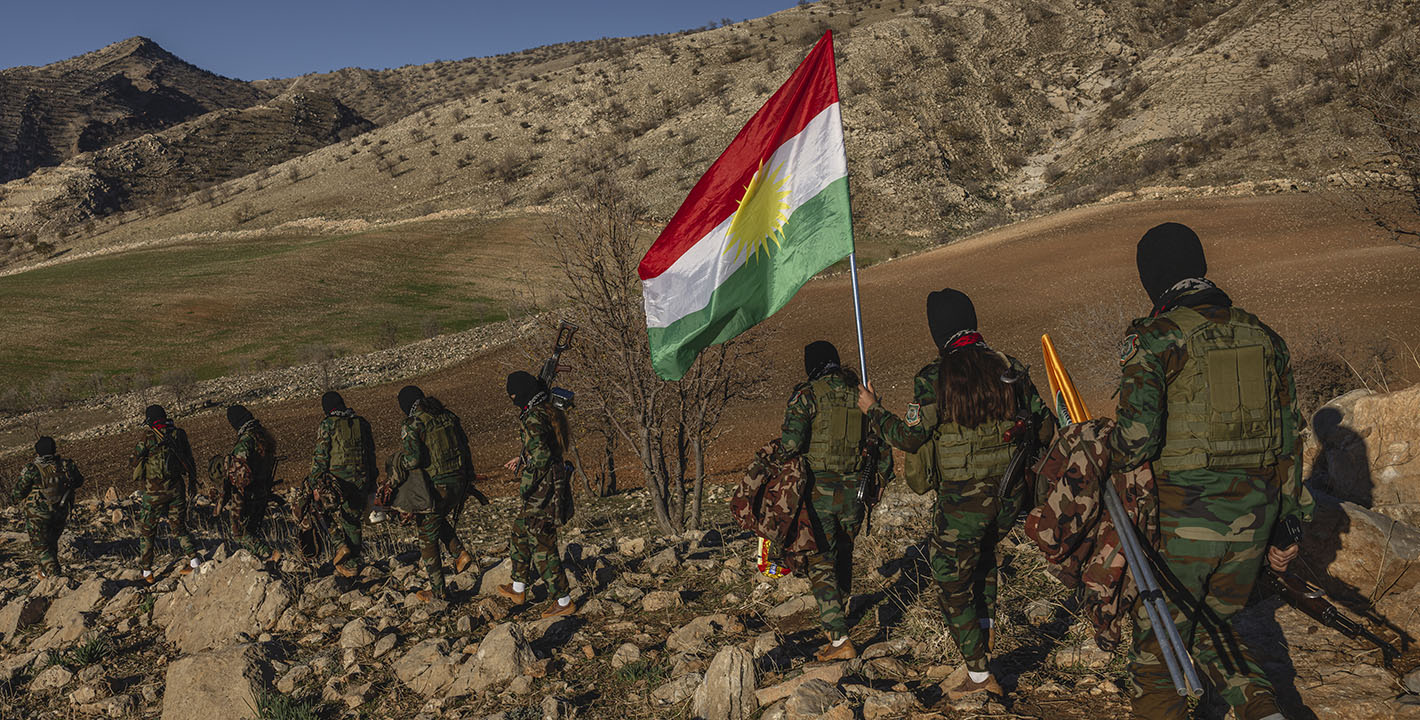
Following its deal with the United States, Iran may act against Iraq-based dissidents.
Wladimir van Wilgenburg
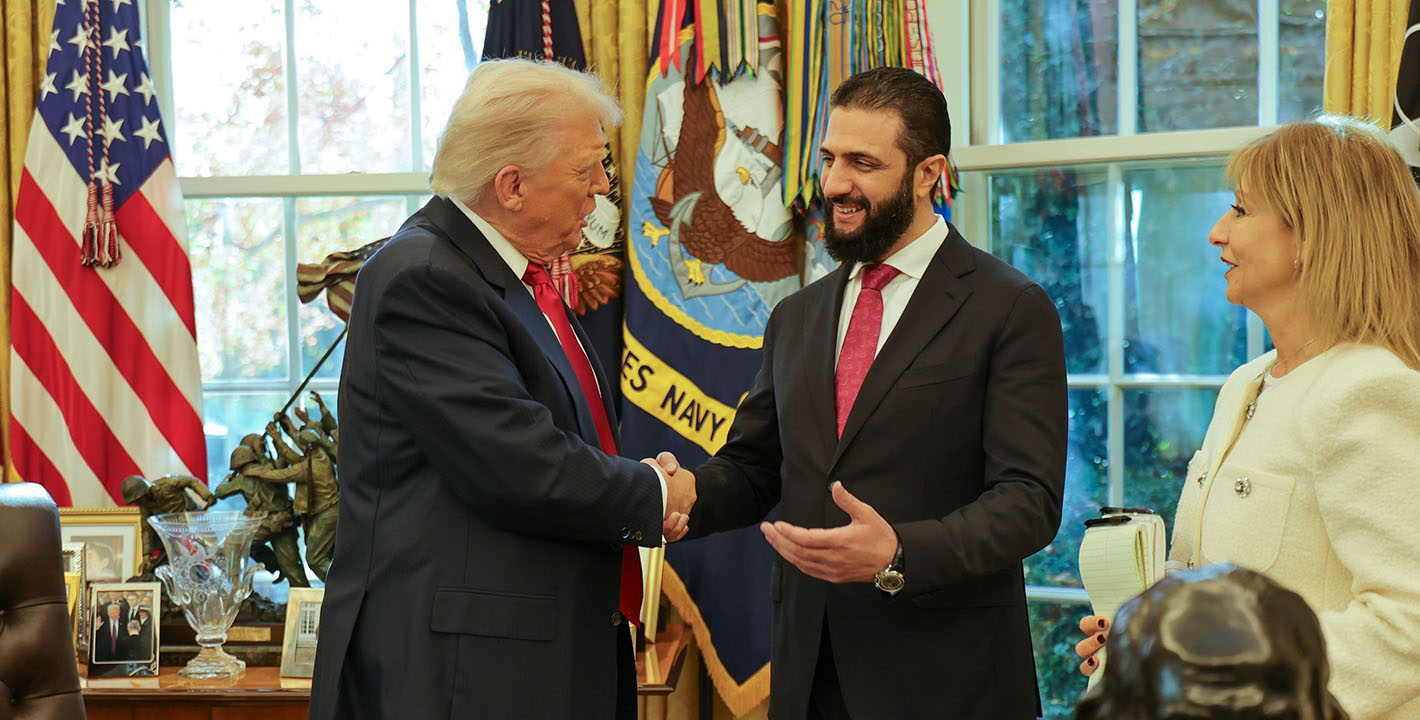
Any move by the United States to make good on Trump’s suggestion that Washington persuade Damascus to confront Hezbollah militarily would have catastrophic consequences.

Kheder Khaddour
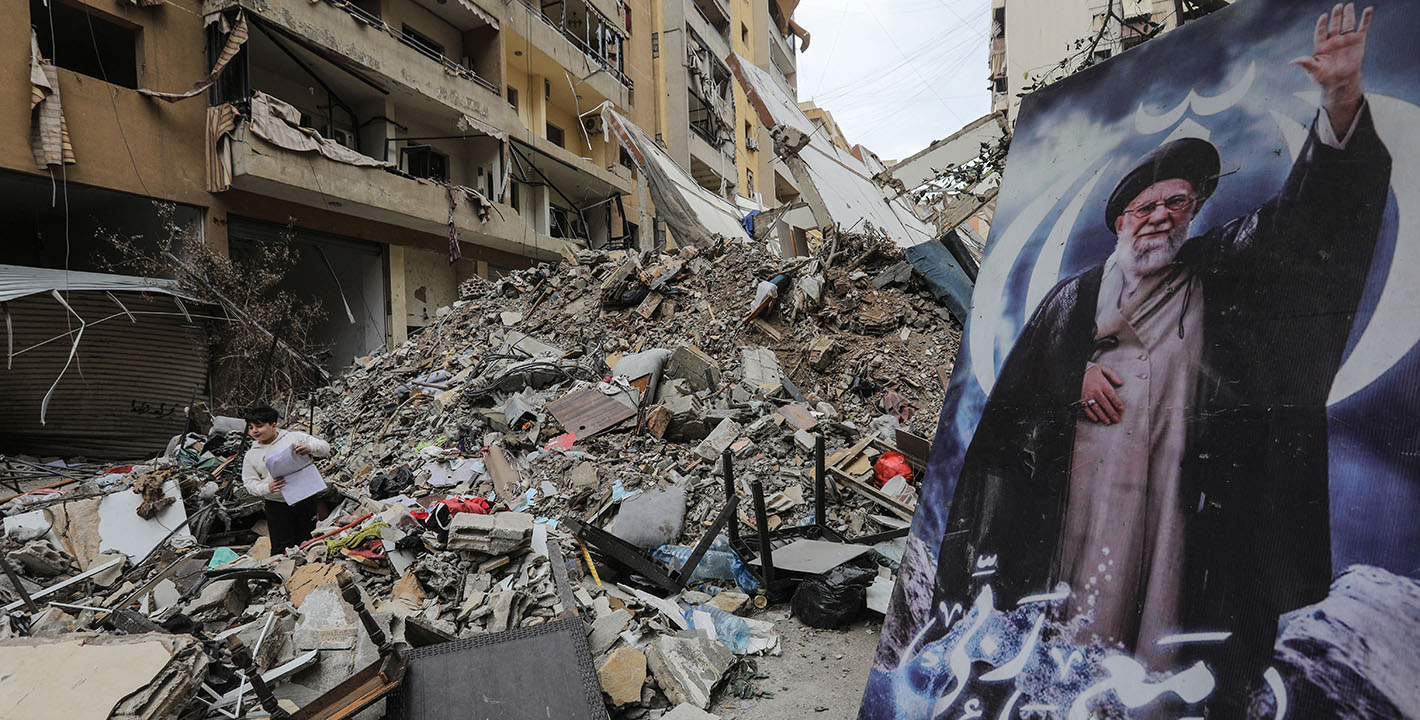
As talks begin between Washington and Tehran, Beirut has an opening to advance a regional plan for the party’s disarmament.
Michael Young
What is behind Marco Rubio’s announcement that the body is now an international nongovernmental organization?

Zaha Hassan
In an interview, Elizabeth Thompson recalls how the country formulated a liberal constitution in 1920, before being denied by France and Britain.
Michael Young